Tata Motors shares rise even as net profit slides 30% in Q1, should you buy, sell, or hold?

Shares of automobile giant Tata Motors Ltd saw an uptick in the early session on Monday, August 11, even after the Tata group firm reported a 30 percent fall in net profit for the quarter ended June 30, 2025.

Tata Motors Q1 FY26 Results
Tata Motors reported a consolidated net profit of ₹3,924 crore for April–June FY26, marking a 30% drop from ₹5,643 crore in the same quarter last year. Revenue from operations fell 2.5% year-on-year to ₹1.04 lakh crore, compared to ₹1.07 lakh crore in Q1 FY25.

The automaker attributed the weaker performance to volume declines across all business segments and reduced profitability at Jaguar Land Rover (JLR). JLR’s revenue slipped over 9% to £6.6 billion, with EBIT margin contracting 490 basis points to 4%, impacted in part by tariffs imposed by Donald Trump.

At 9:25 a.m., Tata Motors’ shares were trading at ₹637.85 on the NSE, up 0.6%.

Investmnt View: Should investors buy, sell, or hold Tata Motors shares?

Trump Rules Out Trade Talks with India Amid 50% Tariff Standoff

US-India trade tensions

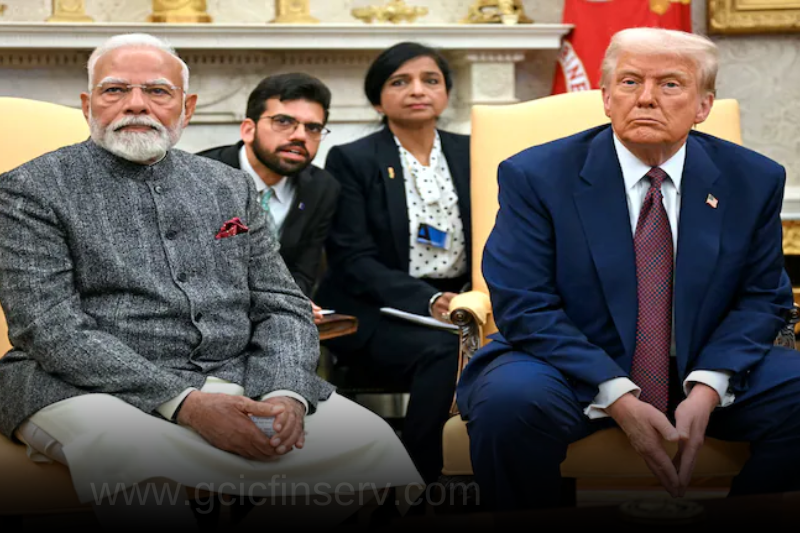
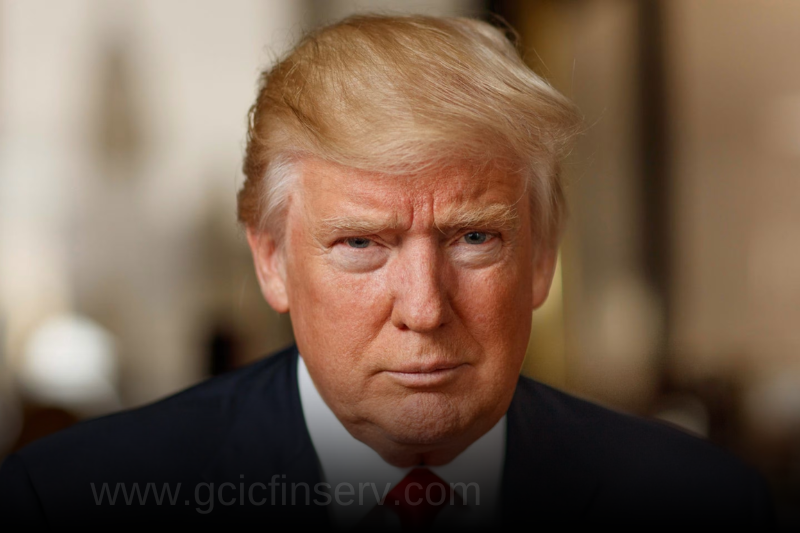
After imposing a sweeping 50 per cent tariff on Indian imports, US President Donald Trump has ruled out any further trade negotiations with the country, driving US-India trade tensions to a new low in over two decades.

“No, not until we get it resolved,” Trump told reporters in the Oval Office in response to a question on whether he expected talks between the two countries to resume in light of the 50 per cent tariff.

Trump’s remarks followed his earlier warning of “secondary sanctions” against countries over their continued oil trade with Russia.

During a press briefing at White House, Trump was asked why India was being singled out for purchasing Russian oil when many other countries, including China, do the same.

In response, Trump said, “It’s only been 8 hours. So let’s see what happens. You’re going to see a lot more…You’re going to see so much secondary sanctions.”
His remarks came after the White House on Wednesday issued an executive order imposing an additional 25 per cent tariff on Indian goods, raising the total levy to 50 per cent. The administration cited national security and foreign policy concerns, pointing specifically to India’s ongoing imports of Russian oil.

The order claims that these imports, whether direct or via intermediaries, present an “unusual and extraordinary threat” to the United States and justify emergency economic measures.

While the initial 25 per cent tariff came into effect on August 7, the additional levy will take effect in 21 days and apply to all Indian goods entering US ports — with exceptions for items already in transit and certain exempt categories.

Terming the United States’ move to impose additional tariffs on India over its oil imports from Russia as “unfair, unjustified and unreasonable,” the Ministry of External Affairs (MEA) declared that New Delhi would take “all actions necessary to protect its national interests.

Prime Minister Narendra Modi, meanwhile, said he “won’t compromise on farmers’ interests and is ready to pay heavy price” hours after the US imposed an extra 25 per cent tariff on Indian exports.

“For us, the interest of our farmers is our top priority. India will never compromise on the interests of farmers, fishermen and dairy farmers. I know we will have to pay a heavy price for it and I am ready for it. India is ready for it,” he said.”

Did New Tariffs on India Influence US-Russia Talks on Ukraine? Trump Hints at a Link

In a surprising turn of events, former US President Donald Trump suggested that new tariffs imposed on India might have indirectly influenced recent progress in US-Russia talks aimed at ending the Ukraine war. Speaking to the media and through his social media channels, Trump indicated that the United States and Russia have made “a lot of progress” toward a ceasefire — and hinted that India’s economic penalties may have contributed to the shift.

50% Tariff on India: A Strategic Move?

Trump recently doubled the import tariff on Indian goods from 25% to 50%, citing New Delhi’s continued purchase of Russian oil. In a post on Truth Social, he speculated, “We put a 50 per cent tariff on India. I don’t know if that had anything to do with it, but we’ve had very productive talks today (with Russia).”

These comments came shortly after a high-level three-hour meeting between US special envoy Steve and Russian President Vladimir Putin in Moscow. Trump also mentioned that he’s planning to meet both President Putin and Ukrainian President Volodymyr Zelensky as early as next week in an attempt to broker peace.

Accusations Against India

Trump didn’t mince words when criticizing India for what he called profiteering from Russian oil. “India is not only buying massive amounts of Russian oil, they are then selling it on the open market for big profits. They don’t care how many people in Ukraine are being killed by the Russian war machine,” he stated.

When questioned if the punitive tariffs on India would be lifted if peace talks succeeded, Trump replied that the matter would be “determined later.” As of now, the 50% tariff remains in place.

Why Only India? Could China Be Next?

Although several countries — including China — continue to import Russian oil, India has been uniquely targeted. When asked about this, Trump said, “It may happen. I mean, I don’t know. I can’t tell you yet, but I can (impose a punitive tariff). We did it with India. We’re doing it probably with a couple of others. One of them could be China.”

The tariffs appear to be part of a broader strategy to pressure buyers of Russian oil, effectively choking the Kremlin’s wartime economy. Bloomberg reports that the US is also considering sanctions on Russia’s shadow fleet of oil tankers and various entities that support them.

India’s Response: “Unfortunate and Unjust”

India has condemned the tariff hike as “extremely unfortunate,” noting that its energy imports are based on market dynamics and national interest, not geopolitics. The Indian government reiterated its commitment to energy security for its 1.4 billion citizens and expressed disappointment over being singled out for actions others are also undertaking.

In a statement, India said: “We will take all necessary actions to protect our national interest.” The increased tariff on Indian goods is expected to take effect within the next three weeks.


Conclusion

While it’s unclear whether the tariff hike on India truly influenced the tone of US-Russia talks, Trump’s remarks suggest a strategic use of economic pressure not just on adversaries but also on allies. As global tensions remain high, India finds itself caught in the middle of a high-stakes geopolitical and economic chessboard.

RBI Holds Interest Rates Steady; Governor Sanjay Malhotra Reaffirms ‘Neutral’ Policy Stance

The Reserve Bank of India (RBI) has decided to keep rates unchanged, maintaining a neutral stance amid ongoing global uncertainties and domestic inflation concerns. After a three-day meeting, the Monetary Policy Committee (MPC) concluded its deliberations with an emphasis on supporting growth while closely monitoring inflation trends and external risks.

RBI Governor Sanjay Malhotra, in a press briefing, reiterated that the central bank’s approach remains balanced and that it will continue to take appropriate measures to sustain economic momentum.


🔑 3 Key Takeaways from RBI’s August 2025 Monetary Policy Update

1. Policy Rates Unchanged

The RBI has kept all key policy rates, including the repo rate, unchanged. This decision reflects a wait-and-watch approach in light of evolving global and domestic economic conditions.

Despite pressure from rising commodity prices and geopolitical tensions, the RBI has refrained from making any aggressive moves, signaling confidence in the Indian economy’s underlying strength.

2. Inflation Outlook: Mixed But Improving

The inflation outlook has improved thanks to a strong monsoon, which is expected to ease food prices in the coming months. However, headline inflation (CPI) may temporarily rise above 4% due to an unfavourable base effect and ongoing global challenges.

Core inflation (which excludes food and fuel) is expected to remain moderately above 4%, suggesting that while price stability is within reach, vigilance is still necessary.

3. GDP Growth Projection Held at 6.5%

India’s real GDP growth for FY26 has been projected at 6.5%, indicating steady momentum despite external challenges. The RBI emphasized that policy support will continue to ensure that growth remains resilient and broad-based.


Geopolitical Pressures in the Background

One of the major concerns influencing RBI’s stance is the escalating global trade tensions. The United States recently imposed a 25% import tariff on Indian goods, along with an undisclosed penalty related to India’s military and energy trade with Russia. This, combined with the threat of further tariffs, has added a layer of uncertainty to India’s trade outlook.

Governor Malhotra acknowledged these risks and emphasized the need for a measured and flexible policy stance to navigate global headwinds.


Bottom Line

The RBI’s decision to hold rates steady shows a deliberate strategy to balance growth and inflation without adding stress to borrowing costs. As the world economy remains volatile, India’s central bank is betting on domestic demand, better inflation control, and strategic support for growth sectors to keep the economy on track.

Investors, borrowers, and businesses can expect a stable policy environment in the near term, but all eyes remain on how global developments, especially on the trade front, unfold in the coming months.

Rupee Drops as Trump Threatens Higher Tariffs on India Over Russian Oil Trade

The Indian rupee opened 20 paise lower on August 5, amid renewed geopolitical tensions, after former U.S. President Donald Trump issued a strong warning threatening increased tariffs on Indian imports. The currency opened at ₹87.85 against the U.S. dollar, compared to the previous close of ₹87.65, reflecting investor anxiety over the potential impact of trade tensions and foreign outflows.

Trump’s Accusation: Profiteering from Russian Oil

In a post on Truth Social, Trump accused India of purchasing “massive amounts of Russian oil” and allegedly reselling it for profit, while criticizing the country for being indifferent to the ongoing Russia-Ukraine war. He went on to say:

“They don’t care how many people in Ukraine are being killed by the Russian War Machine.”

Trump concluded the post with a firm declaration:

“Because of this, I will be substantially raising the Tariff paid by India to the USA.”

This statement marked a fresh escalation in an already tense global trade environment.

India’s Strong Rebuttal

India’s Ministry of External Affairs (MEA) swiftly responded with a six-point rebuttal, asserting that India’s oil trade decisions are based on national interest and energy security, not on geopolitical pressures.

The MEA also called out the “double standards” of Western nations, pointing out that several of them had quietly expanded their own energy ties with Russia while criticizing India publicly.

MUFG Bank noted that the comments might be part of a negotiation tactic aimed at influencing India’s role in the Russia-Ukraine conflict:

“Whether these barrage of comments are mainly negotiating tactics against India to partly prod for changes in the Russia-Ukraine war remains to be seen.”

Market Reactions & Currency Pressure

According to Kunal Sodhani, head of treasury at Shinhan Bank:

“Trump tweets against India are creating pressure on the rupee.”

A senior private bank trader quoted by Reuters added that Trump’s remarks only amplified the rupee’s vulnerability, which was already under pressure due to a challenging global environment.

“Today was already shaping up to be a difficult session, and Trump’s latest tariff threat only amplified the pressure.”

The trader further warned of potential capital outflows from Indian equities, triggered by heightened trade tensions, which could add to rupee weakness.

RBI’s Likely Role

Market watchers expect the Reserve Bank of India (RBI) to step in, if the rupee shows signs of deeper depreciation:

“They won’t want to let the rupee depreciate unchecked, especially in the face of U.S. rhetoric.”

Domestic Sentiment & Policy Position

While Prime Minister Narendra Modi hasn’t directly addressed the tariff threat, he has repeatedly encouraged Indian citizens to “buy local” and support domestic industries — a sentiment that aligns with reducing dependency on foreign trade amid such tensions.

Conclusion: More Than Just Currency Fluctuation

The rupee’s dip on August 5 is more than a routine market move — it’s a reflection of geopolitical complexities, energy diplomacy, and global economic power plays. As the trade narrative between India and the U.S. evolves, markets may continue to witness heightened volatility, and investors will be watching both Washington and New Delhi closely for further developments.


Key Takeaway:
Global politics are once again driving market sentiment. For investors and policy makers, the road ahead will require a fine balance between diplomacy, economic interests, and currency stability.

ITC Shares Rise After Q1 Results: Should You Buy, Sell, or Hold?

Shares of ITC Ltd. traded in the green on August 4, following the release of its Q1 FY26 results. The diversified conglomerate reported a largely flat net profit, in line with market expectations, but strong revenue growth across key segments sparked investor interest.

Q1FY26 Results Snapshot

ITC’s standalone net profit for the quarter ended June 30, 2025, stood at ₹4,912 crore — marginally down from ₹4,917 crore in the same quarter last year. While bottom-line growth remained subdued due to elevated input costs, the company’s topline performance offered some positives.

Revenue from operations rose 20% year-on-year to ₹21,059 crore, up from ₹17,593 crore in Q1FY25. The growth was led by strong performances in the cigarette, agri-business, and fast-moving consumer goods (FMCG) segments.

Segment-Wise Performance

  • Cigarettes: Revenue rose 8%, supported by a stable tax environment and strategic market interventions. However, rising costs of leaf tobacco continued to pressure margins—a trend that may persist through the rest of FY26.

  • FMCG: This segment showed promising growth, benefiting from volume expansion and improved pricing strategies.

  • Agri Business: Performance remained robust, driven by exports and domestic demand.

  • Paperboards: This segment continued to face headwinds due to weak demand and pricing pressures.

Management Outlook

ITC remains optimistic about the economic landscape, citing easing inflation, expected rate cuts, increased liquidity support by the RBI, and proactive government spending as potential catalysts for growth in the coming quarters.

Should You Buy, Sell, or Hold?

Buy, if you’re looking for a long-term play in a diversified business with strong brand equity and defensive characteristics. The company’s steady performance, strong cash flows, and dividend history make it appealing to conservative investors.

Hold, if you’re already invested and seeking stable returns. The near-term pressure on margins may limit upside, but the long-term story remains intact with growth in FMCG and continued dominance in cigarettes.

Sell, if you are looking for high-growth opportunities in a shorter timeframe. While ITC remains fundamentally strong, the lack of profit growth and margin compression could limit stock performance in the near term.


Bottom Line:
ITC’s Q1 results were steady, with strong revenue growth offsetting margin pressures. For long-term investors, it continues to be a reliable bet in a diversified portfolio — though near-term challenges warrant a cautious approach.

IMF Raises India’s FY26 Growth Forecast to 6.4% Citing Lower Inflation and Strong Reforms

The International Monetary Fund (IMF) has revised India’s economic growth forecast for FY2025-26 upward to 6.4%, from its previous estimate of 6.2% in April. This 20 basis point increase, announced in the IMF’s latest World Economic Outlook (WEO) update, reflects a more favorable external environment and easing inflation.

The report also upgraded India’s FY2026-27 GDP growth estimate by 10 basis points to 6.4%, signaling sustained momentum over the medium term.

“In India, growth is projected to be 6.4 percent in [FY 2026 and FY 2027], with both numbers revised slightly upward, reflecting a more benign external environment than assumed in the April reference forecast,” the IMF stated.

Responding to questions on the rationale behind the revision, Deniz Igan, Division Chief at the IMF, cited the suspension of higher tariffs and a drop in food prices that contributed to lower inflation. Additionally, she emphasized the role of structural reforms, consistent consumption growth, and continued public investment in maintaining stable economic expansion.

These factors collectively underpin India’s resilient economic outlook and reinforce investor confidence moving forward.

GST Rate Revision Proposed for 148 Items: Higher Tax on Tobacco and Aerated Water

GST Rate Revision

The Group of Ministers (GoM) on Rate Rationalisation has reportedly recommended changes to the GST structure for various goods and services. Sources indicate the introduction of a new 35% GST rate for specific items, including tobacco products and aerated beverages, up from the current 28%.

Proposed GST Changes

The GoM has suggested GST Rate Revision for 148 items. Key changes include:

Category Current GST Rate Proposed GST Rate
Tobacco products 28% 35%
Aerated water 28% 35%
Watches (above ₹25,000) 18% 28%
Shoes (above ₹15,000) 18% 28%
Packaged water 18% 5%
Notebooks 12% 5%

Impact on Apparel

Changes to GST rates for readymade garments have also been proposed:

  • 5% GST on garments priced up to ₹1,500.
  • 18% GST on garments priced between ₹1,500 and ₹10,000.
  • 28% GST on garments priced above ₹10,000.

Focus on Luxury and Everyday Items

The recommendations include higher taxes on luxury items such as leather bags, cosmetics, and high-end watches. Conversely, essential items like notebooks and packaged water may see reduced rates to provide relief to consumers.

The proposed revisions aim to rationalize the tax structure and balance the fiscal burden across various segments. Final decisions are expected after review and approval by the GST Council.

Read Also: 5 Reasons why you need a Financial Distributor

Adani Green Energy Stock increases 9%: Factors Behind 50% Gains in 4 Sessions

Adani Green Energy’s stock price climbed by 9% during early trading on Monday, extending its rally over the past few sessions. The stock has soared nearly 50% in just four trading days, reflecting strong investor confidence.

Stock Performance
On Monday, Adani Green Energy shares opened at ₹1,364 on the BSE, up around 3% from the previous close of ₹1,324.55. The stock continued its upward momentum, hitting an intraday high of ₹1,445, registering a 9% increase. This rally builds on the stock’s rise from ₹897 on November 26, 2024, marking an impressive 50% gain over four sessions.

Key Drivers Behind the Rally

  1. Clarification on Legal Allegations
    The company recently addressed allegations of bribery involving its chairman Gautam Adani and other officials. In a statement to stock exchanges, Adani Green Energy clarified that neither Gautam Adani, Sagar Adani, nor Vineet Jain was charged with violations of the U.S. Foreign Corrupt Practices Act (FCPA) in the cases filed by the U.S. Department of Justice (DOJ) or the Securities and Exchange Commission (SEC).

    The company acknowledged that its directors face charges related to alleged securities fraud, wire fraud conspiracy, and securities fraud conspiracy. However, the clarification appears to have eased investor concerns.

  2. Support from Key Investors
    Major investors have reaffirmed their confidence in Adani Group stocks. Following CQG Partners, Abu Dhabi’s International Holding Company (IHC), the investment arm of the ruling family, has expressed continued faith in the group, bolstering market sentiment.
  3. Stable Ratings Amid Challenges
    Rating agencies have maintained a cautious yet steady outlook. Fitch Ratings reaffirmed Adani Green Energy’s Long-Term Foreign-Currency Issuer Default Rating at “BBB-” while placing it on Rating Watch Negative. This stability has helped reassure investors amid ongoing scrutiny.

The recent developments, combined with institutional backing and resilient ratings, have fueled optimism around Adani Green Energy, driving significant gains in a short period. However, investors are advised to stay updated on further developments and market conditions.

Nifty 50 Surges Over 400 Points, Sensex Reclaims 80K: Experts Highlight Top Stock Picks

Nifty 50 Surges Over 400 Points

Nifty 50 Surges Over 400 Points, Sensex Reclaims 80K: Experts Highlight Top Stock Picks

Building on the momentum from Friday’s rebound, the Indian stock market started the week strong, with significant gains in early trading. The Nifty 50 index opened higher at 24,253, quickly climbing to an intraday high of 24,330, marking a 423-point rally from its previous close of 23,907.

Similarly, the BSE Sensex opened at 80,193 and peaked at 80,452 in the morning session, recording a jump of 1,355 points. The Nifty Bank index also saw robust gains, opening at 52,046 and reaching an intraday high of 52,232, reflecting an impressive 1,100-point surge.

Factors Driving the Rally

Political Stability After Maharashtra Election Results
The decisive victory of the BJP-led alliance in Maharashtra’s elections played a crucial role in boosting investor sentiment. According to Palka Arora Chopra, Director at Master Capital Services, the win is expected to bring political stability and strengthen pro-business policies, positively influencing sectors such as infrastructure, urban development, and manufacturing.

“The continuity of policy direction, particularly in infrastructure development, is likely to attract further investments. This could lead to significant activity in the construction and real estate sectors,” Chopra added.

Reliance’s Strong Performance Amid Geopolitical Tensions
Reliance Industries, a heavyweight in the Sensex, gained around 2.5% during early trade. Mahesh M. Ojha, AVP at Hensex Securities, attributed this to rising crude oil prices driven by escalating geopolitical tensions. The company is poised to benefit from increased margins on existing stockpiles, along with continued growth in its retail and telecom businesses.

“Reliance looks strong for both short-term and long-term investors, given the positive trends in its core and diversified operations,” Ojha noted.

Sectoral Outlook

The election results have shifted investor focus from defensive sectors like FMCG and pharma to more aggressive plays in railways, infrastructure, and banking.

Avinash Gorakshkar, Head of Research at Profitmart Securities, observed that government initiatives in infrastructure and railways could drive demand in these sectors. Additionally, increased credit demand from infrastructure projects is likely to benefit banking stocks.

“The alignment of policies between the central and Maharashtra state governments ensures a conducive environment for growth in these sectors,” Gorakshkar stated.

As the market gains momentum, experts suggest keeping an eye on infrastructure, banking, and energy sectors for potential opportunities.

Read Also: Mutual fund monthly SIP inflow crosses Rs 25,000 crore mark for first time