Rupee hits highest level in August against US dollar on fading tariff risks, GST boost

Rupee hits highest level in August

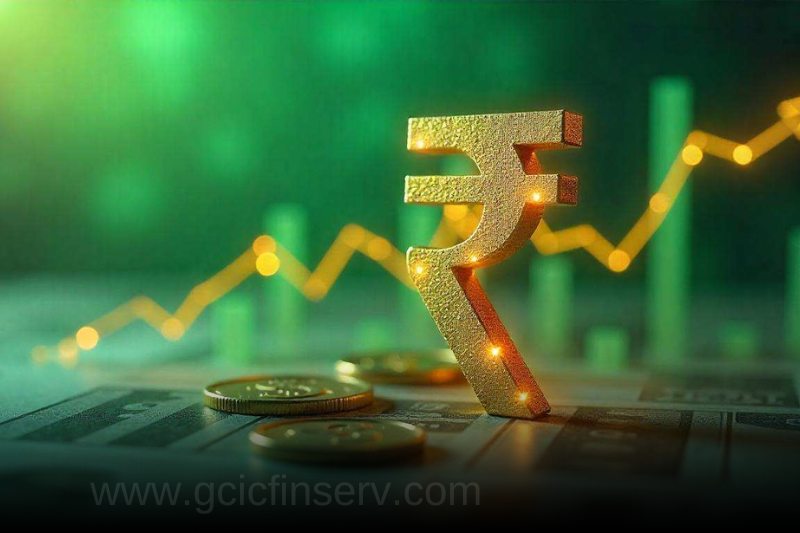
Indian Rupee strengthened to its highest level in August against the US dollar on Tuesday, supported by easing concerns over additional US tariffs and expectations that proposed GST reforms could boost domestic economic growth.

The currency rose to as much as 87.2050 per US dollar, compared with 87.35 in the previous session, before settling at 87.2250. Analysts attributed the gains to renewed optimism following the Trump-Putin meeting and upcoming US-Ukraine talks, which Nomura said may reduce the likelihood of new sanctions or tariffs on India over its Russian oil purchases.

Prime Minister Narendra Modi’s proposed GST rationalisation is also lifting sentiment, with economists saying the measures could boost consumption and offset pressure from weak external demand.

While the rupee advanced, most Asian currencies slipped as US Treasury yields climbed, with the 10-year yield hitting a two-week high on Monday.

Apple leases 2.7 lakh sqft office in Bengaluru in ₹1,000-crore deal

Apple leases 2.7 lakh sqft office in Bengaluru

Apple Bengaluru office expansion has taken a major step forward with the US tech giant signing a 10-year lease for 2.7 lakh sq ft of premium office space at Embassy Zenith on Sankey Road, Vasanth Nagar.

Apple has taken the 5th to 13th floors of the property at a monthly rent of ₹6.31 crore, with the agreement commencing on April 3, 2025, and registered in July. The facility, expected to accommodate over 1,200 employees, has a carpet area of 1.96 lakh sq ft and a chargeable area of 2.69 lakh sq ft. The company has paid a ₹31.57-crore security deposit, ₹1.5 crore in stamp duty, and agreed to a 4.5% annual rent escalation. The property is owned by Mac Charles (India) Ltd, part of the Embassy Group.

This is Apple’s second major office in Bengaluru. In 2021, it leased 1.16 lakh sq ft at Prestige Minsk Square on Cubbon Road for ₹2.43 crore per month, with operations beginning in 2023. The company is also eyeing further expansion within Embassy Zenith.

Apple’s retail footprint is expanding as well. It has leased 8,000 sq ft at Phoenix Mall of Asia in north Bengaluru for its third India store, at an annual rent of ₹2.09 crore. The 10-year lease, signed in November 2024, will take effect from August 2025. Additional space has been secured at Oberoi Sky City Mall in Borivali, Mumbai (12,600 sq ft) and in Batrayanpura, Bengaluru (8,000 sq ft).

The expansion underscores Apple’s growing commitment to India, now a key manufacturing hub for the iPhone. On its Q3 FY25 earnings call, CEO Tim Cook expressed excitement over upcoming store launches and highlighted that most iPhones sold in the US are now made in India. Meanwhile, Foxconn, Apple’s key partner, has started producing the iPhone 17 at its new Devanahalli facility near Bengaluru.

Bajaj Finance, Axis Bank, HDFC Bank Rally Up to 6% on S&P Upgrade and GST Reform Hopes

GST Reform

Bajaj Finance shares rallied sharply in early trade on Monday, gaining as much as 6% alongside Axis Bank and HDFC Bank as investor sentiment improved following S&P Global’s credit-rating upgrades and expectations of GST reforms.

At 10:10 a.m., the Nifty Bank index climbed over 1.3% to around 56,035, while the Nifty Financial Services index gained nearly 2% to trade near 26,810. Bajaj Finance, Axis Bank, and HDFC Bank were among the top gainers, supported by strong buying across the financial sector.

S&P Upgrade Lifts Sentiment

S&P Global on Aug. 15 upgraded its long-term issuer credit ratings for seven major Indian banks — including SBI, ICICI Bank, HDFC Bank, Axis Bank, Kotak Mahindra Bank, Union Bank of India, and Indian Bank — and three finance companies: Bajaj Finance, Tata Capital, and L&T Finance. The rating agency cited India’s robust economic momentum, improved asset quality, and strong profitability outlook for the financial sector.

“We expect India’s banks to maintain adequate asset quality, good profitability, and enhanced capitalization over the next 12-24 months despite some pockets of stress,” S&P said, adding that overall credit risk has declined. The move comes just a day after S&P upgraded India’s sovereign credit rating, providing a further boost to investor sentiment.

Motilal Oswal Financial Services noted that the upgrade could reduce borrowing costs for Indian financial firms accessing overseas markets. Companies such as Bajaj Finance could see a 15–20 basis point reduction in external commercial borrowing rates, while stronger foreign portfolio investment flows may support the rupee and bond yields.

GST Reform Expectations Add Fuel

Investor enthusiasm was also buoyed by Prime Minister Narendra Modi’s Independence Day hint at a new round of GST reforms, potentially to be unveiled around Diwali. The government is reportedly considering a simplified two-slab tax structure — “standard” and “merit” — with special rates limited to a few items.

Analysts believe such reforms could lower the tax burden on consumers purchasing electronics and other durables, spurring demand. This is expected to benefit NBFCs like Bajaj Finance, which finance retail purchases through affordable EMIs.

The dual tailwinds of a global rating upgrade and anticipated tax reforms have positioned India’s financial stocks for continued momentum, analysts say, as foreign and domestic investors alike increase exposure to the sector.

Trump Signals New Tariffs on Steel and Semiconductor Imports

Trump Signals New Tariffs

Trump tariffs on steel and semiconductor imports are set to become a major focus of U.S. trade policy, with President Donald Trump indicating that new duties could be announced in the coming weeks.

“I’ll be setting tariffs next week and the week after on steel and on, I would say, chips,” Trump told reporters aboard Air Force One en route to Alaska for a meeting with Russian President Vladimir Putin. He said the duties would start at lower rates to give companies time to ramp up U.S. production before increasing sharply later—a phased approach he has also proposed for pharmaceutical imports.

“I’m going to have a rate that is going to be lower at the beginning—that gives them a chance to come in and build — and very high after a certain period of time,” Trump said, adding that he expects companies will choose to manufacture in the U.S. rather than face steep tariffs.

Trump has reshaped global trade policy with sweeping duties on imports from nearly all countries, targeting industries including automotive and metals. In February, he raised tariffs on steel and aluminum to 25%, later doubling them to 50% in May to encourage domestic production. It remains unclear if the upcoming announcement will include further hikes on those metals.

Last week, Trump said semiconductor imports would face a 100% tariff unless companies committed to building manufacturing facilities in the United States. His latest comments came alongside news that Apple would invest an additional $100 billion in domestic operations.

Explore More Blogs

RBI said to have sold at least $5 billion to boost rupee

RBI sold $5 billion to boost rupee

RBI intervention in the currency market has reportedly intensified as the Reserve Bank of India seeks to support the Indian rupee amid rising pressure from U.S. tariffs and increased currency volatility.

The rupee hit 87.89 per dollar last week, narrowly avoiding its all-time low, after U.S. President Donald Trump doubled tariffs on Indian goods to 50% on Aug. 6 in retaliation for New Delhi’s purchases of Russian oil. Economists warn that a weaker rupee could worsen imported inflation and weigh on the country’s fragile economic recovery.

This marked intervention signals a possible departure from the RBI’s cautious stance under Governor Sanjay Malhotra, who assumed office in December. The rupee has fallen over 2% this year, ranking among Asia’s worst-performing currencies, with roughly half of the slide occurring in the past two weeks following Trump’s tariff announcement.

“The recent RBI intervention seems to have more to do with their dislike of the volatility in the exchange rate,” said Dhiraj Nim, currency strategist at Australia and New Zealand Banking Group Ltd. The rupee held steady at 87.62 per dollar on Monday.

Sources said the RBI was active in offshore markets ahead of domestic trading hours last week, using non-deliverable forwards to influence the currency without directly selling large amounts of dollars. This strategy, also employed last year, was accompanied by a sharp $9.3 billion drop in forex reserves to $689 billion in the week ending Aug. 1 — the steepest fall since November. While part of the decline reflects valuation changes in global currencies, it also points to increased market activity by the central bank.

Tata Motors shares rise even as net profit slides 30% in Q1, should you buy, sell, or hold?

Tata Motors shares rose in early trading on Monday, August 11, despite the automobile major reporting a 30% year-on-year decline in net profit for Q1 FY26. Investors are now assessing whether the recent weakness presents a buying opportunity or whether caution is warranted.

Tata Motors Q1 FY26 Results

Tata Motors reported a consolidated net profit of ₹3,924 crore for April–June FY26, marking a 30% drop from ₹5,643 crore in the same quarter last year. Revenue from operations fell 2.5% year-on-year to ₹1.04 lakh crore, compared to ₹1.07 lakh crore in Q1 FY25.

The automaker attributed the weaker performance to volume declines across all business segments and reduced profitability at Jaguar Land Rover (JLR). JLR’s revenue slipped over 9% to £6.6 billion, with EBIT margin contracting 490 basis points to 4%, impacted in part by tariffs imposed by Donald Trump.

At 9:25 a.m., Tata Motors’ shares were trading at ₹637.85 on the NSE, up 0.6%.

Investmnt View: Should investors buy, sell, or hold Tata Motors shares?

Trump Rules Out Trade Talks with India Amid 50% Tariff Standoff

US-India trade tensions

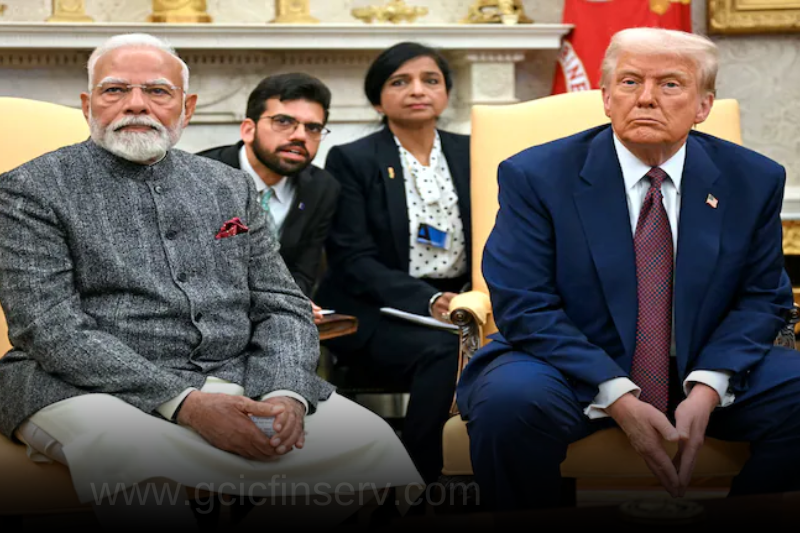
US India trade tensions have intensified after US President Donald Trump ruled out further trade talks with New Delhi amid a 50 per cent tariff dispute linked to India’s continued purchases of Russian oil.

“No, not until we get it resolved,” Trump told reporters in the Oval Office in response to a question on whether he expected talks between the two countries to resume in light of the 50 per cent tariff.

Trump’s remarks followed his earlier warning of “secondary sanctions” against countries over their continued oil trade with Russia.

During a press briefing at White House, Trump was asked why India was being singled out for purchasing Russian oil when many other countries, including China, do the same.

In response, Trump said, “It’s only been 8 hours. So let’s see what happens. You’re going to see a lot more…You’re going to see so much secondary sanctions.”
His remarks came after the White House on Wednesday issued an executive order imposing an additional 25 per cent tariff on Indian goods, raising the total levy to 50 per cent. The administration cited national security and foreign policy concerns, pointing specifically to India’s ongoing imports of Russian oil.

The order claims that these imports, whether direct or via intermediaries, present an “unusual and extraordinary threat” to the United States and justify emergency economic measures.

While the initial 25 per cent tariff came into effect on August 7, the additional levy will take effect in 21 days and apply to all Indian goods entering US ports — with exceptions for items already in transit and certain exempt categories.

Terming the United States’ move to impose additional tariffs on India over its oil imports from Russia as “unfair, unjustified and unreasonable,” the Ministry of External Affairs (MEA) declared that New Delhi would take “all actions necessary to protect its national interests.

Prime Minister Narendra Modi, meanwhile, said he “won’t compromise on farmers’ interests and is ready to pay heavy price” hours after the US imposed an extra 25 per cent tariff on Indian exports.

“For us, the interest of our farmers is our top priority. India will never compromise on the interests of farmers, fishermen and dairy farmers. I know we will have to pay a heavy price for it and I am ready for it. India is ready for it,” he said.”

Did New Tariffs on India Influence US-Russia Talks on Ukraine? Trump Hints at a Link

India tariffs have emerged as a major geopolitical and economic issue after Donald Trump suggested that the 50% tariff imposed on Indian goods may have indirectly influenced recent US-Russia discussions over the Ukraine war.

India Tariffs and US-Russia Talks: Is There a Link?

Trump suggested that the India tariffs may have played a role in the tone of recent discussions between Washington and Moscow. However, there is currently no independent confirmation that the tariff decision directly influenced Russia’s position in the talks.

The comments nevertheless highlight how economic measures can become part of wider diplomatic strategies. Tariffs imposed for trade or geopolitical reasons can affect international relationships well beyond the countries directly involved.

50% Tariff on India: A Strategic Move?

Trump recently doubled the import tariff on Indian goods from 25% to 50%, citing New Delhi’s continued purchase of Russian oil. In a post on Truth Social, he speculated, “We put a 50 per cent tariff on India. I don’t know if that had anything to do with it, but we’ve had very productive talks today (with Russia).”

These comments came shortly after a high-level three-hour meeting between US special envoy Steve and Russian President Vladimir Putin in Moscow. Trump also mentioned that he’s planning to meet both President Putin and Ukrainian President Volodymyr Zelensky as early as next week in an attempt to broker peace.

Accusations Against India

Trump didn’t mince words when criticizing India for what he called profiteering from Russian oil. “India is not only buying massive amounts of Russian oil, they are then selling it on the open market for big profits. They don’t care how many people in Ukraine are being killed by the Russian war machine,” he stated.

When questioned if the punitive tariffs on India would be lifted if peace talks succeeded, Trump replied that the matter would be “determined later.” As of now, the 50% tariff remains in place.

Why Only India? Could China Be Next?

Although several countries — including China — continue to import Russian oil, India has been uniquely targeted. When asked about this, Trump said, “It may happen. I mean, I don’t know. I can’t tell you yet, but I can (impose a punitive tariff). We did it with India. We’re doing it probably with a couple of others. One of them could be China.”

The tariffs appear to be part of a broader strategy to pressure buyers of Russian oil, effectively choking the Kremlin’s wartime economy. Bloomberg reports that the US is also considering sanctions on Russia’s shadow fleet of oil tankers and various entities that support them.

India’s Response: “Unfortunate and Unjust”

India has condemned the tariff hike as “extremely unfortunate,” noting that its energy imports are based on market dynamics and national interest, not geopolitics. The Indian government reiterated its commitment to energy security for its 1.4 billion citizens and expressed disappointment over being singled out for actions others are also undertaking.

In a statement, India said: “We will take all necessary actions to protect our national interest.” The increased tariff on Indian goods is expected to take effect within the next three weeks.


Conclusion

While it’s unclear whether the tariff hike on India truly influenced the tone of US-Russia talks, Trump’s remarks suggest a strategic use of economic pressure not just on adversaries but also on allies. As global tensions remain high, India finds itself caught in the middle of a high-stakes geopolitical and economic chessboard.

RBI Holds Interest Rates Steady; Governor Sanjay Malhotra Reaffirms ‘Neutral’ Policy Stance

RBI August 2025 Monetary Policy kept key policy rates unchanged, with the Reserve Bank of India maintaining a neutral stance amid global uncertainties, inflation concerns and evolving domestic economic conditions.

RBI Governor Sanjay Malhotra, in a press briefing, reiterated that the central bank’s approach remains balanced and that it will continue to take appropriate measures to sustain economic momentum.

🔑 3 Key Takeaways from RBI’s August 2025 Monetary Policy Update

1. Policy Rates Unchanged

The RBI has kept all key policy rates, including the repo rate, unchanged. This decision reflects a wait-and-watch approach in light of evolving global and domestic economic conditions.

Despite pressure from rising commodity prices and geopolitical tensions, the RBI has refrained from making any aggressive moves, signaling confidence in the Indian economy’s underlying strength.

2. Inflation Outlook: Mixed But Improving

The inflation outlook has improved thanks to a strong monsoon, which is expected to ease food prices in the coming months. However, headline inflation (CPI) may temporarily rise above 4% due to an unfavourable base effect and ongoing global challenges.

Core inflation (which excludes food and fuel) is expected to remain moderately above 4%, suggesting that while price stability is within reach, vigilance is still necessary.

3. GDP Growth Projection Held at 6.5%

India’s real GDP growth for FY26 has been projected at 6.5%, indicating steady momentum despite external challenges. The RBI emphasized that policy support will continue to ensure that growth remains resilient and broad-based.


Geopolitical Pressures in the Background

One of the major concerns influencing RBI’s stance is the escalating global trade tensions. The United States recently imposed a 25% import tariff on Indian goods, along with an undisclosed penalty related to India’s military and energy trade with Russia. This, combined with the threat of further tariffs, has added a layer of uncertainty to India’s trade outlook.

Governor Malhotra acknowledged these risks and emphasized the need for a measured and flexible policy stance to navigate global headwinds.


Bottom Line

The RBI’s decision to hold rates steady shows a deliberate strategy to balance growth and inflation without adding stress to borrowing costs. As the world economy remains volatile, India’s central bank is betting on domestic demand, better inflation control, and strategic support for growth sectors to keep the economy on track.

Investors, borrowers, and businesses can expect a stable policy environment in the near term, but all eyes remain on how global developments, especially on the trade front, unfold in the coming months.

Rupee Drops as Trump Threatens Higher Tariffs on India Over Russian Oil Trade

Indian rupee falls 20 paise against the U.S. dollar on August 5 as renewed trade tensions between India and the United States triggered investor concerns. The rupee opened at ₹87.85 against the dollar, compared with the previous close of ₹87.65, as markets reacted to former U.S. President Donald Trump’s threat of higher tariffs on Indian imports over the country’s Russian oil purchases.

The move came amid broader concerns about geopolitical tensions, potential foreign capital outflows and the impact of trade restrictions on India’s economic outlook.

Trump’s Accusation: Profiteering from Russian Oil

In a post on Truth Social, Trump accused India of purchasing “massive amounts of Russian oil” and allegedly reselling it for profit, while criticizing the country for being indifferent to the ongoing Russia-Ukraine war. He went on to say:

“They don’t care how many people in Ukraine are being killed by the Russian War Machine.”

Trump concluded the post with a firm declaration:

“Because of this, I will be substantially raising the Tariff paid by India to the USA.”

This statement marked a fresh escalation in an already tense global trade environment.

India’s Strong Rebuttal

India’s Ministry of External Affairs (MEA) swiftly responded with a six-point rebuttal, asserting that India’s oil trade decisions are based on national interest and energy security, not on geopolitical pressures.

The MEA also called out the “double standards” of Western nations, pointing out that several of them had quietly expanded their own energy ties with Russia while criticizing India publicly.

MUFG Bank noted that the comments might be part of a negotiation tactic aimed at influencing India’s role in the Russia-Ukraine conflict:

“Whether these barrage of comments are mainly negotiating tactics against India to partly prod for changes in the Russia-Ukraine war remains to be seen.”

Indian Rupee Falls as Markets React to Tariff Threats

According to Kunal Sodhani, head of treasury at Shinhan Bank:

“Trump tweets against India are creating pressure on the rupee.”

A senior private bank trader quoted by Reuters added that Trump’s remarks only amplified the rupee’s vulnerability, which was already under pressure due to a challenging global environment.

“Today was already shaping up to be a difficult session, and Trump’s latest tariff threat only amplified the pressure.”

The trader further warned of potential capital outflows from Indian equities, triggered by heightened trade tensions, which could add to rupee weakness.

RBI’s Likely Role

Market watchers expect the Reserve Bank of India (RBI) to step in, if the rupee shows signs of deeper depreciation:

“They won’t want to let the rupee depreciate unchecked, especially in the face of U.S. rhetoric.”

Domestic Sentiment & Policy Position

While Prime Minister Narendra Modi hasn’t directly addressed the tariff threat, he has repeatedly encouraged Indian citizens to “buy local” and support domestic industries — a sentiment that aligns with reducing dependency on foreign trade amid such tensions.

Conclusion: More Than Just Currency Fluctuation

The rupee’s dip on August 5 is more than a routine market move — it’s a reflection of geopolitical complexities, energy diplomacy, and global economic power plays. As the trade narrative between India and the U.S. evolves, markets may continue to witness heightened volatility, and investors will be watching both Washington and New Delhi closely for further developments.


Key Takeaway:
Global politics are once again driving market sentiment. For investors and policy makers, the road ahead will require a fine balance between diplomacy, economic interests, and currency stability.