
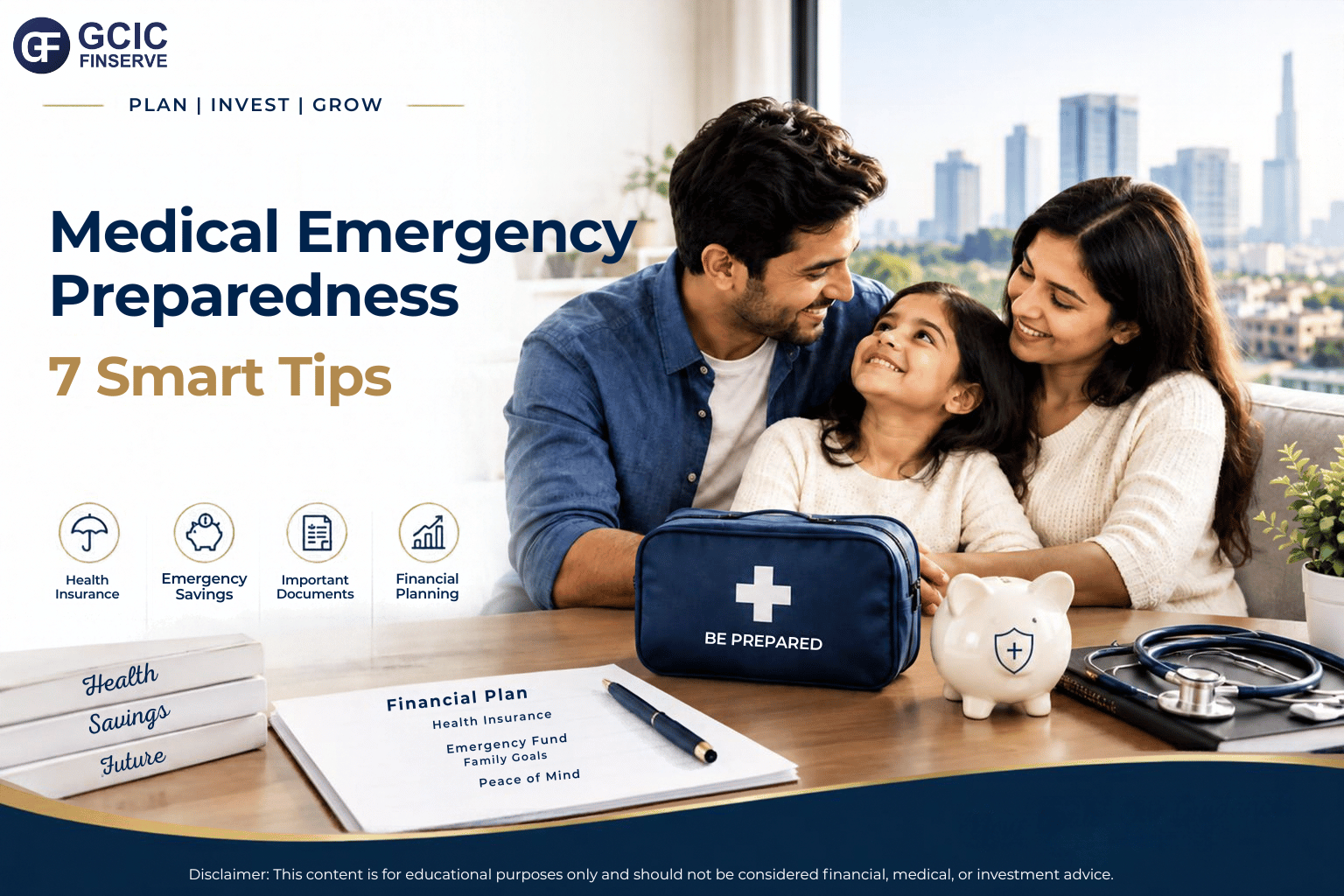
Medical emergency preparedness is something many families think about only when an unexpected health situation occurs. A sudden hospital visit, surgery, or extended treatment can bring emotional stress along with significant financial expenses.
For families living in South Delhi, Gurugram, Noida, Ghaziabad, and other parts of Delhi NCR, having a basic financial preparedness plan can help them manage unexpected healthcare costs without unnecessarily disturbing money reserved for important goals.
The purpose is not to predict when an emergency will happen. It is to understand your health insurance, maintain accessible savings, and keep important documents organized.
Why Medical Emergency Preparedness Matters in Delhi NCR
Medical expenses can vary depending on the treatment, hospital, room category, medicines, diagnostic tests, and duration of hospitalization.
A medical emergency may involve more than the hospital bill. Families could also face expenses related to medicines after discharge, travel, temporary loss of income, and other household responsibilities.
This is why medical emergency preparedness should be considered as part of your overall financial planning.
The objective is simple:
Be prepared for unexpected expenses while protecting your family’s financial priorities.
The Financial Impact of a Medical Emergency
Imagine receiving an unexpected call from a hospital late at night.
Your immediate priority is the health of your family member. At the same time, you may need to arrange money, understand the estimated treatment cost, and check what your health insurance policy covers.
Without accessible funds, a family may need to borrow money or withdraw long-term investments at an inconvenient time.
Health insurance can help with eligible expenses, but coverage depends on the policy’s terms, conditions, exclusions, limits, and waiting periods.
Therefore, insurance and emergency savings can serve different purposes in a family’s financial preparedness plan.
7 Smart Steps for Medical Emergency Preparedness
1. Maintain a Separate Emergency Fund
Consider keeping a portion of your money in an easily accessible emergency reserve.
A commonly considered starting point is three to six months of essential household expenses. However, the appropriate amount depends on your income stability, family responsibilities, existing insurance and financial commitments.
The important factor is accessibility.
Emergency money should be suitable for short-term needs and should not depend entirely on selling long-term investments at short notice.
2. Review Your Health Insurance Regularly
Having health insurance is important, but purchasing a policy once and never reviewing it may not be sufficient.
Review your policy periodically and understand:
- Sum insured
- Waiting periods
- Room-rent conditions
- Exclusions
- Co-payment requirements
- Network hospitals
- Claim conditions
- Renewal terms
If your family size, income, or healthcare requirements change, reassess whether your existing coverage remains suitable.
You can explore health insurance planning in Delhi NCR to understand the factors involved in selecting insurance coverage.
Always read the policy wording carefully before making a decision.
3. Understand Where Your Emergency Money Is Kept
Emergency funds should be accessible when required.
Different financial products have different levels of liquidity, risk, withdrawal conditions, and taxation. Before using any financial product for emergency reserves, understand how quickly you can access the money and what conditions may apply.
Emergency money should prioritize accessibility and suitability over chasing higher returns.
The right option depends on your personal circumstances and financial requirements.
4. Keep Short-Term Needs Separate From Long-Term Investments
Money required for immediate expenses and money intended for long-term goals serve different purposes.
For example, investments planned for retirement or a child’s education may have a longer time horizon. Selling these investments suddenly during an emergency could affect the original financial objective.
Maintaining a separate emergency reserve may reduce the need to disturb long-term investments when an unexpected expense arises.
You can also review your mutual fund investment resources to understand available tools and investment information.
5. Keep Important Documents Accessible
During an emergency, searching for policy documents or account information can add unnecessary stress.
Keep important information organized, including:
- Health insurance policy details
- Policy number
- Insurer contact information
- Health card details
- Nominee information
- Important investment records
- Bank account information
- Emergency contact details
Family members should also know where these documents are stored and how to access them when necessary.
Avoid sharing sensitive financial or identity documents through unsecured channels.
6. Understand Expenses That Insurance May Not Cover
Health insurance does not necessarily cover every medical expense.
Depending on the policy, certain expenses may be subject to exclusions, limits, deductibles, co-payments, waiting periods, or other conditions.
For this reason, maintaining accessible savings alongside health insurance may help families manage expenses that arise during or after treatment.
For official insurance information and regulatory resources, you can visit the Insurance Regulatory and Development Authority of India (IRDAI).
Understand your policy before you need to use it.
7. Review Your Emergency Preparedness Every Year
Your financial circumstances can change over time.
A new child, change in income, home loan, increased family responsibilities, or a different health insurance requirement may affect your preparedness needs.
Set aside time at least once a year to review:
Emergency savings → Health insurance → Important documents → Short-term liquidity
You can also review your financial plan after a major life event, such as marriage, childbirth, job change, or retirement.
Regular reviews can help you identify gaps before they become urgent.
How GCIC Finserve Supports Investor Awareness
GCIC Finserve Limited helps investors understand financial products and available investment options, including mutual funds, fixed deposits, and other applicable solutions, subject to product features, eligibility, and relevant terms.
As an AMFI-registered mutual fund distributor, GCIC Finserve focuses on investor awareness and helping investors understand available options and associated risks.
For health insurance and other financial products, individuals should carefully review the relevant product documents, coverage conditions, exclusions, and applicable terms before making a decision.
You can learn more about GCIC Finserve and explore the available financial services.
Understand your options. Know the risks. Make informed decisions.
FAQs
Q1. What is medical emergency preparedness?
Medical emergency preparedness means maintaining accessible savings, understanding health insurance coverage, and organizing important financial documents so that an unexpected medical situation can be managed more effectively.
Q2. Is health insurance enough for a medical emergency?
Health insurance can help cover eligible medical expenses, subject to the policy’s terms, conditions, exclusions, and limits. An emergency reserve may also help with expenses that are not covered by the policy.
Q3. How much should I keep in an emergency fund?
A commonly considered starting point is three to six months of essential expenses. The appropriate amount depends on income stability, family responsibilities, existing savings, and financial commitments.
Q4. Should emergency money be invested?
Emergency money should prioritize accessibility and suitability for short-term needs. Before selecting a financial product, understand its risks, liquidity, withdrawal process, applicable charges, and taxation.
Q5. How often should I review my health insurance?
Review your health insurance at least annually and whenever there is a significant change in your family, income, or healthcare requirements. Always check the current policy terms.
Q6. Does health insurance cover every hospital expense?
Not necessarily. Coverage depends on the policy’s terms, exclusions, limits, waiting periods, and other conditions. Read the policy documents carefully and confirm the applicable coverage with the insurer.
Final Thoughts
A medical emergency cannot always be predicted, but families can prepare for its potential financial impact.
Maintaining accessible emergency savings, understanding health insurance coverage, organizing important documents, and separating short-term needs from long-term investments can support better financial preparedness.
You cannot predict tomorrow. But you can prepare for it.
Disclaimer
Insurance products are subject to policy terms, conditions, exclusions, waiting periods, and other applicable provisions. Mutual fund investments are subject to market risks, including the potential loss of capital, liquidity risk, and market volatility. Please read all relevant policy and scheme-related documents carefully before making a financial decision. This article is provided for general educational and informational purposes only and should not be considered insurance, financial, investment, legal, or tax advice.